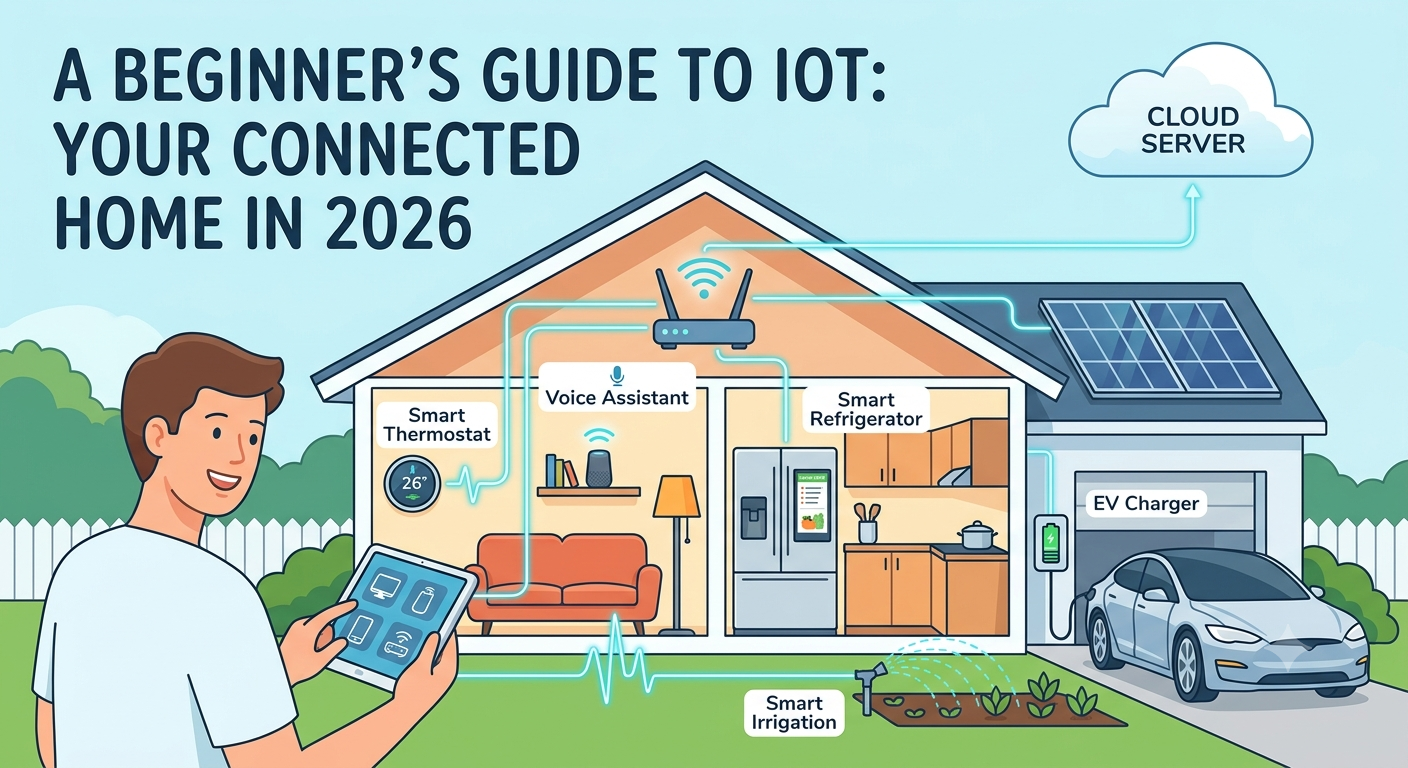
What Is the Internet of Things (IoT)? A Complete Beginner’s Guide (2026)
Meta Description
Learn what the Internet of Things (IoT) is, how it works, its advantages, disadvantages, applications, examples, and future trends in this complete beginner-friendly guide.
Focus Keyword: What Is the Internet of Things (IoT)
SEO Slug: what-is-internet-of-things-iot
URL Suggestion:https://tech.menu.hunt.blog/what-is-internet-of-things-iot
Primary Keyword: What Is the Internet of Things (IoT)
Secondary Keywords:
- Internet of Things Explained
- IoT Explained
- IoT Devices
- Smart Devices
- IoT Applications
- IoT for Beginners
- Smart Home Technology
- Industrial IoT
- Future of IoT
- IoT Examples
Estimated Reading Time: 11–13 Minutes
What Is the Internet of Things (IoT)? A Complete Beginner’s Guide (2026)
The Internet of Things, commonly known as IoT, is transforming the way people interact with technology. From smart homes and wearable fitness trackers to connected vehicles and intelligent factories, IoT is making everyday devices smarter and more efficient.
Instead of operating independently, IoT devices communicate with each other through the internet, collect data, and make decisions automatically. This connectivity helps businesses improve productivity while making everyday life more convenient for consumers.
Today, billions of IoT devices are connected worldwide, and experts predict that this number will continue to grow rapidly over the coming years.
In this comprehensive guide, you’ll learn what the Internet of Things (IoT) is, how it works, its key components, real-world applications, advantages, challenges, and what the future holds for this rapidly expanding technology.
What Is the Internet of Things (IoT)?
The Internet of Things (IoT) refers to a network of physical devices connected to the internet that can collect, share, and exchange data without requiring constant human interaction.
These connected devices contain technologies such as:
- Sensors
- Software
- Internet connectivity
- Processors
- Communication hardware
By sharing data with each other and cloud-based systems, IoT devices can monitor environments, automate tasks, and improve decision-making.
How Does IoT Work?
The Internet of Things operates through several connected steps.
Step 1: Data Collection
IoT devices use sensors to collect information from their surroundings.
Examples include:
- Temperature
- Location
- Motion
- Heart rate
- Air quality
- Humidity
- Vehicle speed
Step 2: Internet Connection
The collected data is transmitted through the internet using technologies such as:
- Wi-Fi
- Bluetooth
- 5G
- Ethernet
- Cellular networks
- LPWAN
Step 3: Cloud Processing
The transmitted data is stored and analyzed on cloud servers.
Artificial Intelligence and Machine Learning can further process this information to identify patterns and generate insights.
Step 4: User Action or Automation
Based on the processed information, the system either:
- Sends notifications
- Performs automatic actions
- Generates reports
- Controls connected devices
For example, a smart thermostat automatically adjusts room temperature based on user preferences.
Key Components of IoT
Every IoT system consists of several essential components.
Sensors
Sensors gather real-world information such as temperature, movement, pressure, or light.
Connectivity
Devices communicate through internet technologies including Wi-Fi, Bluetooth, Zigbee, cellular networks, or satellite connections.
Cloud Computing
Cloud platforms store, process, and analyze data received from IoT devices.
Data Analytics
Advanced analytics and Artificial Intelligence convert raw data into useful insights.
User Interface
Users interact with IoT systems through:
- Mobile apps
- Websites
- Dashboards
- Voice assistants
Examples of IoT Devices
Many people already use IoT devices every day.
Common examples include:
- Smart watches
- Fitness trackers
- Smart TVs
- Smart speakers
- Smart thermostats
- Security cameras
- Smart refrigerators
- Smart lighting systems
- Connected cars
- Smart door locks
These devices improve convenience while collecting valuable information for automation.
Types of IoT
The Internet of Things can be divided into several categories.
Consumer IoT
Consumer IoT focuses on everyday products used by individuals.
Examples:
- Smart homes
- Wearable devices
- Smart appliances
Commercial IoT
Businesses use IoT to improve operations.
Examples include:
- Retail inventory management
- Smart offices
- Hospitality systems
Industrial IoT (IIoT)
Factories and manufacturers use Industrial IoT for:
- Equipment monitoring
- Predictive maintenance
- Automation
- Production optimization
Infrastructure IoT
Governments and cities use IoT to manage:
- Traffic systems
- Public transportation
- Street lighting
- Waste management
- Water distribution
Real-World Applications of IoT
IoT technology impacts many industries.
Smart Homes
Smart home devices automate:
- Lighting
- Heating
- Security
- Entertainment
- Energy management
Healthcare
Healthcare organizations use IoT for:
- Remote patient monitoring
- Wearable health devices
- Smart medical equipment
- Emergency alerts
Agriculture
Farmers use IoT sensors to monitor:
- Soil moisture
- Crop health
- Weather conditions
- Livestock
This improves productivity and reduces waste.
Transportation
Connected vehicles use IoT for:
- GPS navigation
- Fleet management
- Vehicle diagnostics
- Traffic optimization
Manufacturing
Factories monitor machinery in real time to reduce downtime and improve efficiency.
Retail
Retailers use IoT for:
- Inventory tracking
- Smart shelves
- Customer behavior analysis
- Automated checkout systems
Benefits of IoT
The Internet of Things provides many advantages.
Increased Automation
Many routine tasks can be completed automatically without human intervention.
Improved Efficiency
Businesses optimize operations using real-time information.
Better Decision-Making
Continuous data collection provides valuable insights.
Cost Savings
Automation helps reduce maintenance and operational expenses.
Enhanced Customer Experience
Smart devices provide personalized services and greater convenience.
Challenges of IoT
Despite its advantages, IoT also presents several challenges.
Security Risks
Connected devices can become targets for hackers if not properly secured.
Privacy Concerns
IoT devices often collect personal information, making data protection essential.
Compatibility Issues
Devices from different manufacturers may not always communicate effectively.
Internet Dependency
Most IoT systems require stable internet connectivity to function properly.
Large Data Volumes
Managing the enormous amount of data generated by IoT devices requires powerful cloud infrastructure.
IoT vs Traditional Devices
| Feature | IoT Devices | Traditional Devices |
|---|---|---|
| Internet Connection | Yes | Usually No |
| Automation | High | Limited |
| Data Collection | Continuous | Minimal |
| Remote Control | Yes | Usually No |
| Smart Features | Advanced | Basic |
| Software Updates | Automatic | Manual |
Future of IoT
The Internet of Things continues growing rapidly.
Future developments may include:
- Smart cities
- Autonomous vehicles
- AI-powered homes
- Intelligent healthcare
- Connected factories
- Smart agriculture
- Edge Computing integration
- 6G communication networks
Experts predict that tens of billions of IoT devices will be connected globally within the next decade.
Tips for Staying Safe with IoT Devices
Users can improve IoT security by following these best practices:
- Change default passwords.
- Enable two-factor authentication when available.
- Keep device software updated.
- Buy devices from trusted manufacturers.
- Secure home Wi-Fi networks.
- Disable unnecessary remote access features.
- Regularly review privacy settings.
These simple steps significantly reduce security risks.
Frequently Asked Questions (FAQs)
What is IoT in simple words?
The Internet of Things (IoT) is a network of internet-connected devices that collect and exchange data automatically.
What are examples of IoT devices?
Examples include smart watches, smart speakers, smart thermostats, connected cars, security cameras, and fitness trackers.
Is IoT safe?
Yes, if devices are properly secured with strong passwords, regular software updates, and secure internet connections.
Why is IoT important?
IoT improves automation, efficiency, productivity, and decision-making across homes, businesses, healthcare, transportation, and manufacturing.
What is the future of IoT?
IoT is expected to expand rapidly through smart cities, Artificial Intelligence, Edge Computing, connected healthcare, and autonomous transportation.
Conclusion
The Internet of Things (IoT) is changing the way people interact with technology by connecting everyday devices to the internet and enabling them to communicate intelligently. From smart homes and wearable devices to industrial automation and healthcare, IoT is improving efficiency, reducing costs, and creating new opportunities across nearly every industry.
Although challenges such as cybersecurity, privacy, and compatibility remain important, continuous innovation is making IoT systems more secure and reliable. As technologies like Artificial Intelligence, Cloud Computing, and 5G continue to evolve, IoT will play an even greater role in shaping the future of connected living and intelligent business operations.
Understanding IoT today provides valuable knowledge about one of the fastest-growing technologies driving digital transformation around the world.
SEO Checklist
Primary Keyword
- What Is the Internet of Things (IoT) ✅
Secondary Keywords Used
- Internet of Things Explained ✅
- IoT Explained ✅
- IoT Devices ✅
- Smart Devices ✅
- IoT Applications ✅
- Smart Home Technology ✅
- Industrial IoT ✅
- Future of IoT ✅
- IoT Examples ✅
Suggested Image Alt Texts
- Internet of Things (IoT) infographic
- How IoT works diagram
- Smart home IoT devices illustration
- IoT architecture explained
- IoT applications across industries
Internal Linking Suggestions
Link this article to your previous posts:
- What Is Artificial Intelligence?
- What Is Machine Learning?
- What Is Cloud Computing?
- What Is Cybersecurity?
- What Is Blockchain Technology?
- How Does ChatGPT Work?
- What Is Quantum Computing?
Future Internal Links
- What Is Edge Computing?
- What Is 5G Technology?
- What Is Smart Home Technology?
- What Is Big Data?
- What Is Digital Transformation?
- Future Technology Trends in 2030
SEO Tip: This is an evergreen technology topic with consistent search demand. Adding custom diagrams, comparison tables, and internal links to related technology articles can improve engagement, reduce bounce rate, and strengthen your site’s overall SEO authority.