Meta Description
Learn what cybersecurity is, how it works, its importance, types, common cyber threats, best practices, and future trends in this complete beginner-friendly guide.
Focus Keyword: What Is Cybersecurity
SEO Slug: what-is-cybersecurity
URL Suggestion:https://tech.menu.hunt.blog/what-is-cybersecurity
Primary Keyword: What Is Cybersecurity
Secondary Keywords:
- Cybersecurity Explained
- Cyber Security for Beginners
- Types of Cybersecurity
- Cyber Threats
- Online Security
- Information Security
- Network Security
- Internet Security
- Cyber Attacks
- Cybersecurity Best Practices
Estimated Reading Time: 10–12 Minutes
What Is Cybersecurity? A Complete Beginner’s Guide (2026)
As our lives become increasingly digital, protecting personal and business information has never been more important. Every day, millions of people use the internet for banking, shopping, communication, education, and entertainment. While technology offers convenience, it also creates opportunities for cybercriminals to steal sensitive information, spread malware, and disrupt online services.
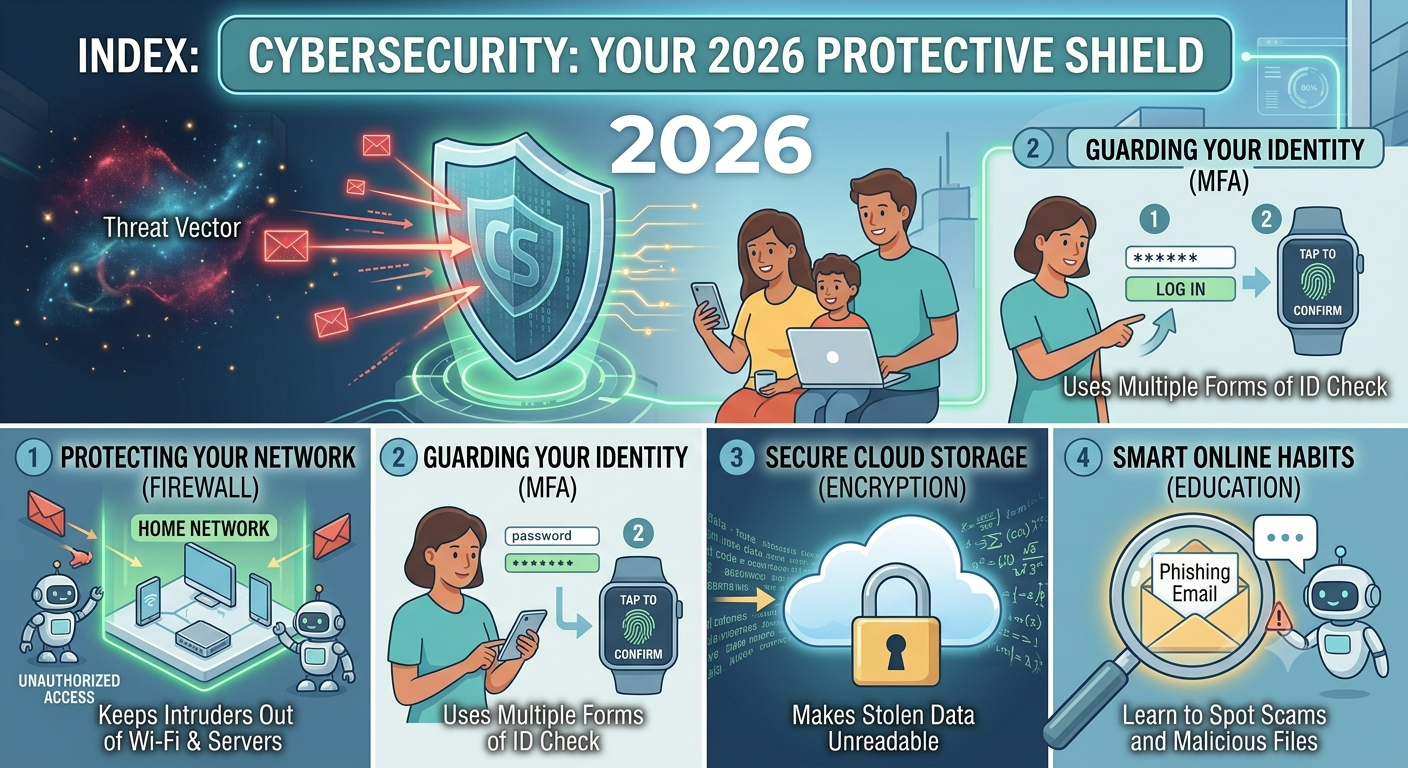
Cybersecurity is the practice of protecting computers, networks, software, and data from cyber threats. It plays a vital role in ensuring that digital systems remain secure, reliable, and available to authorized users.
Whether you’re an individual protecting your personal devices or a business safeguarding customer data, understanding cybersecurity is essential in today’s connected world.
In this comprehensive guide, you’ll learn what cybersecurity is, how it works, its major types, common cyber threats, security best practices, career opportunities, and future trends shaping the industry.
What Is Cybersecurity?
Cybersecurity refers to the technologies, processes, and practices used to protect digital systems, networks, applications, and data from unauthorized access, cyberattacks, and damage.
Its primary goals are to:
- Protect sensitive information
- Prevent unauthorized access
- Detect cyber threats
- Respond to security incidents
- Recover from attacks
Cybersecurity helps individuals and organizations reduce the risk of financial loss, identity theft, and operational disruption.
Why Is Cybersecurity Important?
The world generates an enormous amount of digital data every day. Businesses store customer records, governments manage sensitive information, and individuals save personal files online.
Without proper cybersecurity measures, this information becomes vulnerable to cybercriminals.
Cybersecurity is important because it helps:
- Protect personal privacy
- Secure online banking
- Prevent identity theft
- Safeguard business operations
- Protect government systems
- Maintain customer trust
- Reduce financial losses
As cyber threats become more sophisticated, investing in cybersecurity has become a necessity rather than an option.
How Does Cybersecurity Work?
Cybersecurity works by combining technology, policies, and human awareness to defend digital systems.
The process generally includes several layers of protection.
Step 1: Prevention
Security measures are implemented to stop attacks before they happen.
Examples include:
- Firewalls
- Antivirus software
- Strong passwords
- Multi-factor authentication (MFA)
Step 2: Detection
Security systems continuously monitor networks and devices for suspicious activity.
Advanced tools can detect unusual behavior that may indicate an ongoing attack.
Step 3: Response
If a threat is detected, cybersecurity teams investigate the incident, isolate affected systems, and stop the attack from spreading.
Step 4: Recovery
After the attack is contained, organizations restore affected systems using secure backups and strengthen defenses to prevent similar incidents in the future.
Types of Cybersecurity
Cybersecurity consists of several specialized areas.
1. Network Security
Network security protects computer networks from unauthorized access and attacks.
Common technologies include:
- Firewalls
- Intrusion detection systems
- Virtual Private Networks (VPNs)
2. Application Security
Application security focuses on protecting software from vulnerabilities throughout its development and deployment.
Developers regularly update applications to fix security flaws.
3. Information Security
Information security protects sensitive data whether it is stored, transmitted, or processed.
Encryption is commonly used to secure confidential information.
4. Cloud Security
Cloud security protects data and applications hosted on cloud platforms.
It includes:
- Identity management
- Encryption
- Access control
- Security monitoring
5. Endpoint Security
Endpoint security protects devices such as:
- Laptops
- Smartphones
- Tablets
- Desktop computers
Antivirus software and endpoint detection tools are commonly used.
6. Identity and Access Management (IAM)
IAM ensures that only authorized users can access specific systems and data.
Examples include:
- Password management
- Biometric authentication
- Multi-factor authentication
Common Cyber Threats
Understanding common cyber threats helps users stay protected.
Malware
Malware is malicious software designed to damage or disrupt computer systems.
Examples include:
- Viruses
- Worms
- Trojans
- Spyware
Phishing
Phishing attacks trick users into revealing sensitive information through fake emails, websites, or messages.
Always verify the sender before clicking links.
Ransomware
Ransomware encrypts files and demands payment to restore access.
Regular backups help reduce the impact of ransomware attacks.
DDoS Attacks
Distributed Denial-of-Service (DDoS) attacks overwhelm servers with massive traffic, causing websites and services to become unavailable.
Password Attacks
Weak passwords make accounts vulnerable to unauthorized access.
Using unique, complex passwords significantly improves security.
Insider Threats
Not all cyber threats come from external hackers.
Employees or contractors with authorized access can accidentally or intentionally compromise sensitive information.
Best Cybersecurity Practices
Everyone can improve their online security by following simple best practices.
Use Strong Passwords
Create unique passwords that combine:
- Uppercase letters
- Lowercase letters
- Numbers
- Special characters
Avoid using personal information.
Enable Multi-Factor Authentication
MFA adds an extra layer of security by requiring a second verification method beyond your password.
Keep Software Updated
Install updates regularly to fix security vulnerabilities.
Outdated software is a common target for attackers.
Be Careful with Emails
Never click suspicious links or download unknown attachments.
Verify the sender before responding.
Back Up Important Data
Regular backups ensure that valuable information can be restored after hardware failures or cyberattacks.
Use Trusted Security Software
Install reliable antivirus and anti-malware programs to help detect and block threats.
Benefits of Cybersecurity
Cybersecurity provides many important advantages.
Protects Personal Information
Sensitive information remains secure from unauthorized access.
Reduces Financial Losses
Strong security helps prevent costly cyber incidents.
Builds Customer Trust
Businesses with strong security practices gain greater customer confidence.
Supports Business Continuity
Effective cybersecurity minimizes downtime after security incidents.
Helps Meet Legal Requirements
Many industries require organizations to comply with data protection regulations.
Challenges in Cybersecurity
Cybersecurity professionals face several ongoing challenges.
Evolving Threats
Cybercriminals constantly develop new attack techniques.
Human Error
Many cyber incidents occur because users accidentally click malicious links or use weak passwords.
Skill Shortages
The demand for cybersecurity professionals continues to exceed the available workforce.
Increasing Attack Surface
Cloud computing, remote work, and connected devices create additional security risks.
Career Opportunities in Cybersecurity
Cybersecurity offers excellent career opportunities worldwide.
Popular roles include:
- Security Analyst
- Ethical Hacker
- Penetration Tester
- Security Engineer
- Cloud Security Specialist
- Digital Forensics Investigator
- Incident Response Analyst
- Chief Information Security Officer (CISO)
Demand for skilled cybersecurity professionals continues to grow across every major industry.
Future of Cybersecurity
Cybersecurity is expected to evolve rapidly as technology advances.
Future trends include:
- Artificial Intelligence for threat detection
- Zero Trust Security
- Passwordless authentication
- Quantum-resistant encryption
- Cloud-native security
- Extended Detection and Response (XDR)
- Security automation
- IoT security improvements
Organizations will continue investing heavily in cybersecurity to protect their digital assets.
Frequently Asked Questions (FAQs)
What is cybersecurity in simple words?
Cybersecurity is the practice of protecting computers, networks, software, and data from hackers, malware, and other cyber threats.
Why is cybersecurity important?
It protects personal information, business data, financial transactions, and digital services from cyberattacks.
What are the biggest cyber threats?
Common cyber threats include malware, phishing, ransomware, DDoS attacks, password attacks, and insider threats.
Can individuals improve cybersecurity?
Yes. Strong passwords, software updates, multi-factor authentication, and safe browsing habits significantly improve online security.
Is cybersecurity a good career?
Yes. Cybersecurity is one of the fastest-growing technology fields, offering excellent salaries, job security, and career growth opportunities worldwide.
Conclusion
Cybersecurity is no longer just an IT concern—it is an essential part of everyday life. As more personal information, financial transactions, and business operations move online, protecting digital assets has become increasingly important.
By understanding common cyber threats, following security best practices, and staying informed about emerging technologies, individuals and organizations can significantly reduce their risk of cyberattacks.
Whether you’re a student, business owner, or technology enthusiast, learning cybersecurity fundamentals is one of the smartest investments you can make in today’s digital world.
SEO Checklist
Primary Keyword
- What Is Cybersecurity ✅
Secondary Keywords Included
- Cybersecurity Explained ✅
- Cyber Security for Beginners ✅
- Types of Cybersecurity ✅
- Cyber Threats ✅
- Network Security ✅
- Cloud Security ✅
- Online Security ✅
- Internet Security ✅
- Cyber Attacks ✅
- Cybersecurity Best Practices ✅
Suggested Image Alt Texts
- What Is Cybersecurity infographic
- Common Cybersecurity Threats
- Types of Cybersecurity Explained
- Cybersecurity Best Practices Checklist
- Network Security Illustration
Internal Linking Suggestions
Link this article to:
- What Is Artificial Intelligence? A Complete Beginner’s Guide (2026)
- What Is Machine Learning? A Complete Beginner’s Guide (2026)
- What Is Blockchain Technology? A Complete Beginner’s Guide (2026)
- What Is Cloud Computing? A Complete Beginner’s Guide (2026)
Future Internal Links
- What Is Ethical Hacking?
- What Is VPN?
- What Is Ransomware?
- What Is Phishing?
- What Is Zero Trust Security?
- Best Password Managers in 2026
This article is optimized for beginner search intent, follows a clean heading structure (H1–H3), targets long-tail keywords, and is designed to perform well in search engines while remaining easy to read.