What Is Edge Computing? A Complete Beginner’s Guide (2026)
Meta Description
Learn what edge computing is, how it works, its benefits, challenges, use cases, and how it differs from cloud computing in this complete beginner’s guide.
Focus Keyword: What Is Edge Computing
SEO Slug: what-is-edge-computing
URL Suggestion:https://tech.menu.hunt.blog/what-is-edge-computing
Primary Keyword: What Is Edge Computing
Secondary Keywords:
- Edge Computing Explained
- Edge Computing for Beginners
- Edge Computing vs Cloud Computing
- Edge Devices
- Edge AI
- Distributed Computing
- Edge Network
- IoT Edge Computing
- Future of Edge Computing
- Benefits of Edge Computing
Estimated Reading Time: 11–13 Minutes
What Is Edge Computing? A Complete Beginner’s Guide (2026)
As technology evolves, the amount of data generated every second continues to grow at an incredible rate. Smart homes, connected cars, industrial machines, security cameras, wearable devices, and billions of Internet of Things (IoT) devices constantly produce massive amounts of information.
Traditionally, most of this data has been sent to cloud servers for processing. While cloud computing remains highly effective, sending every piece of data to distant data centers can introduce delays, consume significant bandwidth, and increase operational costs.
This is where Edge Computing comes in.
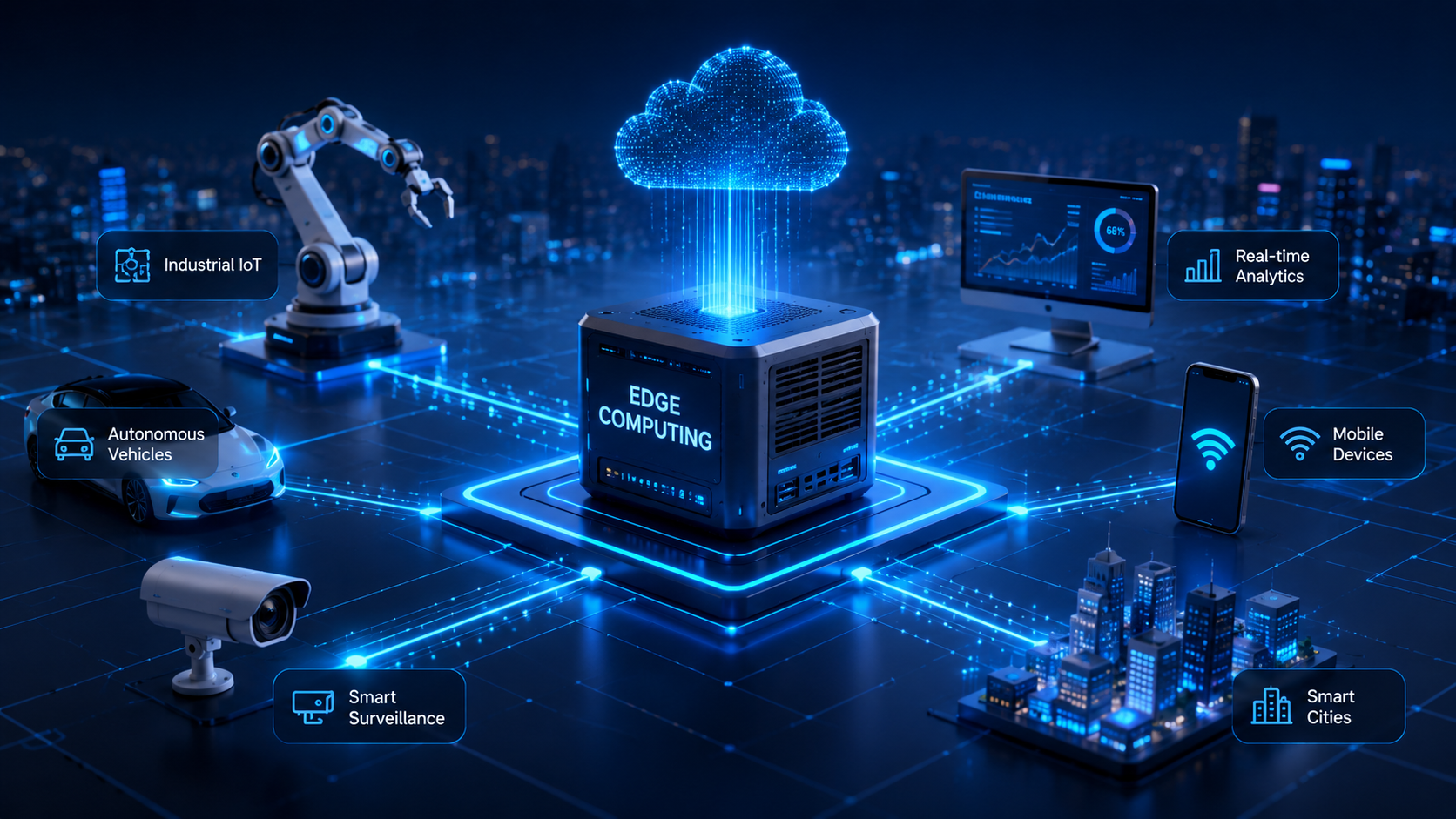
Edge Computing processes data closer to where it is created instead of relying entirely on centralized cloud servers. By reducing the distance that information must travel, Edge Computing enables faster response times, lower latency, improved security, and more efficient use of network resources.
In this comprehensive guide, you’ll learn what Edge Computing is, how it works, its architecture, advantages, disadvantages, real-world applications, and why it is becoming one of the most important technologies shaping the future of digital infrastructure.
What Is Edge Computing?
Edge Computing is a computing model that processes data near the source where it is generated rather than sending all information to a centralized cloud or data center.
Instead of transmitting every sensor reading or user request across long distances, Edge Computing performs data processing on nearby devices or local servers.
Examples include:
- Smart cameras
- Industrial machines
- Autonomous vehicles
- Smart traffic systems
- Healthcare monitoring devices
This local processing allows systems to react almost instantly.
Why Was Edge Computing Created?
Cloud computing revolutionized technology by making storage and computing resources available over the internet.
However, modern applications now require extremely fast response times.
Examples include:
- Self-driving cars
- Smart factories
- Remote surgery
- Real-time gaming
- Video surveillance
Even small delays can create serious problems.
Edge Computing reduces those delays by processing information locally.
How Does Edge Computing Work?
Edge Computing follows a straightforward process.
Step 1: Data Generation
Devices collect information through sensors or user interactions.
Examples include:
- Temperature sensors
- Security cameras
- GPS systems
- Wearable devices
- Smart appliances
Step 2: Local Processing
Instead of immediately sending data to the cloud, nearby edge devices analyze the information.
Examples include:
- Edge servers
- IoT gateways
- Smart routers
- Local computing devices
Step 3: Immediate Action
If an instant response is required, the edge device performs the necessary action immediately.
For example:
A smart security camera detects suspicious movement and instantly sends an alert.
Step 4: Cloud Synchronization
Only important or summarized information is transmitted to cloud servers for long-term storage, analytics, or reporting.
This reduces bandwidth usage while improving efficiency.
Key Components of Edge Computing
Every Edge Computing system consists of several important components.
Edge Devices
These devices generate or process data.
Examples include:
- Smart sensors
- Cameras
- Industrial robots
- Smartphones
- Autonomous vehicles
Edge Gateways
Gateways connect local devices with cloud infrastructure while filtering unnecessary data.
Edge Servers
Edge servers perform complex processing close to users or connected devices.
Cloud Platform
Cloud systems continue storing data, managing applications, and performing large-scale analytics.
Edge Computing complements cloud computing rather than replacing it.
Edge Computing vs Cloud Computing
Many people confuse these technologies.
| Feature | Edge Computing | Cloud Computing |
|---|---|---|
| Processing Location | Near Device | Remote Data Center |
| Latency | Very Low | Higher |
| Internet Dependency | Lower | Higher |
| Response Speed | Faster | Moderate |
| Bandwidth Usage | Lower | Higher |
| Best For | Real-Time Systems | Large Data Storage |
Both technologies often work together.
Advantages of Edge Computing
Edge Computing offers many important benefits.
Lower Latency
Data is processed close to users, resulting in much faster responses.
This is critical for autonomous vehicles and industrial automation.
Reduced Bandwidth Costs
Only essential information is transmitted to cloud servers.
This lowers internet traffic and operational expenses.
Better Reliability
Many edge systems continue functioning even if internet connectivity is temporarily unavailable.
Improved Security
Sensitive information can remain closer to its source instead of constantly traveling across networks.
Real-Time Decision Making
Applications requiring immediate responses benefit significantly from Edge Computing.
Examples include:
- Medical devices
- Traffic control
- Manufacturing
- Robotics
Challenges of Edge Computing
Despite its advantages, Edge Computing also presents challenges.
Infrastructure Costs
Deploying edge servers across multiple locations requires investment.
Device Management
Organizations must monitor and maintain many distributed devices.
Security Risks
Every connected device becomes a potential attack point if not properly secured.
Standardization
Different manufacturers often use different hardware and communication standards.
Real-World Applications of Edge Computing
Edge Computing is already transforming many industries.
Smart Cities
Cities use Edge Computing for:
- Intelligent traffic lights
- Public safety
- Environmental monitoring
- Smart parking
Healthcare
Hospitals use edge devices for:
- Patient monitoring
- Medical imaging
- Emergency response
- Wearable health sensors
Manufacturing
Factories improve production through:
- Predictive maintenance
- Machine monitoring
- Quality control
- Robotics
Autonomous Vehicles
Self-driving vehicles must process information instantly.
Edge Computing enables rapid decision-making without waiting for cloud responses.
Retail
Retailers use edge technology for:
- Smart checkout systems
- Inventory management
- Customer analytics
- Personalized shopping experiences
Agriculture
Farmers monitor:
- Soil conditions
- Irrigation
- Crop health
- Weather
Edge devices analyze this information locally for faster decision-making.
Edge Computing and Artificial Intelligence
Artificial Intelligence and Edge Computing work extremely well together.
Instead of sending every image or sensor reading to cloud servers, AI models can run directly on edge devices.
Examples include:
- Facial recognition cameras
- Voice assistants
- Smart drones
- Industrial robots
This approach is known as Edge AI.
It enables faster decisions while improving privacy.
Future of Edge Computing
Edge Computing is expected to become one of the fastest-growing technology markets.
Future developments include:
- AI-powered edge devices
- 6G connectivity
- Smart factories
- Autonomous transportation
- Smart healthcare
- Industrial automation
- Intelligent robotics
- Advanced IoT ecosystems
As more connected devices are deployed worldwide, Edge Computing will play a critical role in processing the enormous amount of generated data.
Frequently Asked Questions (FAQs)
What is Edge Computing in simple words?
Edge Computing processes data close to where it is created instead of sending everything to distant cloud servers.
Why is Edge Computing important?
It reduces delays, improves speed, lowers bandwidth usage, and supports real-time applications.
Is Edge Computing replacing Cloud Computing?
No.
Edge Computing complements cloud computing by handling real-time processing while cloud platforms continue providing storage and large-scale analytics.
What industries use Edge Computing?
Healthcare, manufacturing, transportation, retail, agriculture, telecommunications, and smart cities all benefit from Edge Computing.
What is Edge AI?
Edge AI combines Artificial Intelligence with Edge Computing, allowing AI models to operate directly on local devices instead of cloud servers.
Conclusion
Edge Computing is becoming an essential technology for a world increasingly powered by connected devices, Artificial Intelligence, and the Internet of Things. By processing data closer to where it is generated, Edge Computing delivers faster performance, lower latency, greater reliability, and improved efficiency compared to relying solely on centralized cloud infrastructure.
Although challenges such as infrastructure costs and device management remain, the advantages of Edge Computing continue driving widespread adoption across healthcare, manufacturing, transportation, retail, and smart city initiatives.
As technologies like AI, 6G, and IoT continue advancing, Edge Computing will play a central role in enabling the next generation of intelligent digital systems.
SEO Checklist
Primary Keyword
- What Is Edge Computing ✅
Secondary Keywords Used
- Edge Computing Explained ✅
- Edge Computing vs Cloud Computing ✅
- Edge AI ✅
- Edge Devices ✅
- Distributed Computing ✅
- IoT Edge Computing ✅
- Benefits of Edge Computing ✅
- Future of Edge Computing ✅
Suggested Image Alt Texts
- What is Edge Computing infographic
- Edge Computing vs Cloud Computing comparison
- Edge AI architecture diagram
- IoT Edge Computing illustration
- Edge Computing workflow explained
Internal Linking Suggestions
Link this article to your previous content:
- What Is Cloud Computing?
- What Is the Internet of Things (IoT)?
- What Is Artificial Intelligence?
- What Is Machine Learning?
- What Is Quantum Computing?
- What Is Cybersecurity?
- Future Technology Trends 2030
Future Internal Links
- What Is 6G Technology?
- What Is Big Data?
- What Is Fog Computing?
- What Is Digital Transformation?
- What Is Smart City Technology?
- Edge AI Explained